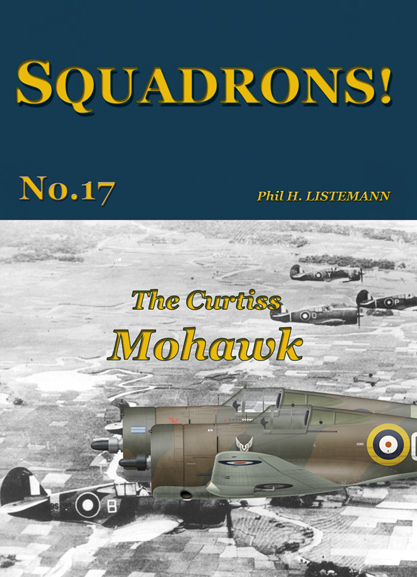
The Hawker Hurricane was the first of the modern fighter types to begin re-equipping the RAF in the 1930s. As the RAF was undergoing a massive expansion in the mid-thirties, the Hurricane, which performed well during its trials, was soon ordered in large numbers. In June 1936, the first order was placed for 600 aircraft. In November 1938, just after the Munich Crisis, another order was placed for 1000. When war broke out almost 500 Hurricanes had been delivered to Fighter Command and that number had reached 2300 one year later. The Hurricane remained the backbone of the RAF’s fighter force at least until 1942 in Europe, 1943 in the Mediterranean and the Middle East, and 1944 in the Far East, when more modern types were introduced or became more plentiful. It remained in frontline inventory in the Middle and Far East until the very last days of the war. Indeed, while the Hurricane as a pure fighter was easily obsolete by that time, it proved to be a fine fighter-bomber. The Hurricane was involved in most of the first combats against the Luftwaffe over France and then over Britain. The basic model was continually improved and the Mk.II appeared in 1941. Being an impressive aircraft at the end of the thirties, the Hurricane attracted interest from foreign countries and the Dominions. Before the war, and just after the war broke out, the Hurricane was exported including in Canada. This book focuses on the connection between the Hurricane and the Canadians which took various aspects in UK with No. 242 (Canadian) Squadron (up to July 1940), No. 1 Squadron RCAF during the Battle of Britain and after (later No. 401 Squadron) and No. 402 Squadron. The Canadians used also the Hurricane in the Middle East with No. 417 Squadron. The book relates also the little known usage of the Hurricane with the RCAF in Canada (Hurricane Mk X, XI and XII). Illustrated with close to 60 photos and 10 colour profiles.

Available as a paperback version with ISBN 979-1096490-26-4
**********************
HOW TO ORDER:
Send your mailing address with your phone number in using ‘contact’ button and we will respond with a Paypal request with the following amount:
EU, UK and USA: 18.50 Euros postage included
Rest of the World: 20.50 Euros postage included
Multiple purchases with combined postage possible.
********************
pdf version is also available as 979-1096490-27-1 (see below)
new pdf uploaded November 2023
Paradoxically, the Mk.V, which ended up being the most numerous variant of the famous fighter built, was not even an intended development of the design. Indeed, it was only considered because of the abandonment of the Spitfire Mk.III. As the Luftwaffe was continually improving its formidable Messerschmitt Bf 109, the latest version of which, the Bf 109F, clearly outclassed the Spitfire Mk.II, the British had no other option but to rapidly find a successor to the latter. At this time, at the end of 1940, the British did not know what the Germans’ were planning and expected them to carry on undertaking daylight raids upon the return of nicer weather. The RAF, therefore, wanted to be ready to counter the new German fighter developments. A solution was soon found by mounting a Merlin 45 (former Merlin III), a simplified version of the Merlin XX, on a slightly strengthened Spitfire Mk.I or Mk.II airframe. Several Spitfires were thus modified, with either a Merlin 45 or Merlin 46, during the first weeks of 1941. The resulting feedback was good and the Air Ministry requested that Supermarine modify, as early as possible, Spitfires already on the assembly lines so they could be put into service as rapidly as possible. This is how the Spitfire Mk.V came to be. In 1941, the Spitfire Mk V progressively became the backbone of the Fighter Command and among the squadrons that switched onto the Spitfire Mk V, there are the three Eagle Squadrons manned by American pilots, Nos. 71, 121 and 133 Squadrons. This is their story on the Spitfire V made of 44 pages, 30 photos and seven colour profiles.

Available as a paperback version with ISBN 979-1096490-22-6
REVISED APRIL 2022
**********************
HOW TO ORDER:
Send your mailing address with your phone number in using ‘contact’ button and we will respond with a Paypal request with the following amount:
EU, UK and USA: 13.50 Euros postage included
Rest of the World: 15.50 Euros postage included
Multiple purchases with combined postage possible.
********************
PDF version is available as 979-1096490-23-3 (see below)
(new PDF uploaded August 2023)
The Douglas Boston or Havoc is one major aircraft of WW2. Designed as a light bomber, it proved to be very versatile and was used with success in various roles over all theatres of operations. In the RAF it served as a night fighter for defensive role since the beginning, first with conventional equipment, later using various devices like the land mines or a huge searchlight installed in the nose. This book tells how the Havoc was used between 1941 and 1943 in this role. 48 pages, over 30 photos and 4 colour profiles.
UPDATED November 2019, July 2024

Available as a paperpack version with ISBN 979-1096490-20-2
**********************
HOW TO ORDER:
Send your mailing address with your phone number in using ‘contact’ button and we will respond with a Paypal request with the following amount:
EU, UK and USA: 14.50 Euros postage included
Rest of the World: 16.50 Euros postage included
Multiple purchases with combined postage possible.
********************
PDF is version available as 979-1096490-21-9 (see below)
New PDF uploaded July 2024
The Republic Thunderbolt came into RAF inventory when it became clear the RAF would be unable to obtain enough North American Mustangs from the Americans. By 1943, the RAF was looking a fighter-bomber able to succeed the Hurricane and the Kittyhawk. The idea was to succeed both type in the Mediterranean and the Hurricane in the Far East. Eventually the Thunderbolt would serve in the Far East only with considerable success even if the Thunderbolt was seen by the RAF as an interim fighter-bomber pending the availabilty of the promised Mustangs. This book comes to complete the study started with the Thunderbolt Mk. I published in SQUADRONS! No. 2. This present book covers the RAF usage of the Thunderbolt Mk II in 68 pages, illustrated with over 50 photos and 11 colour profiles.
updated January 2020, revised October 2022, February 2024

Available as a paperback version with ISBN 979-1096490-18-9
**********************
HOW TO ORDER:
Send your mailing address with your phone number in using ‘contact’ button and we will respond with a Paypal request with the following amount:
EU, UK and USA: 18.00 Euros postage included
Rest of the World: 20.00 Euros postage included
Multiple purchases with combined postage possible.
********************
PDF version is available as 979-1096490-19-6
New PDF uploaded February 2024
The Douglas Boston or Havoc is one major aircraft of WW2. Designed as a light bomber, it proved to be very versatile and was used with success in various roles over all theatre of operations.
The introduction of the Boston into the RAAF’s inventory was a pure accident, being former Dutch aircraft. The usage was planned to be short but at the end, it lasted over two years and a half. Only one RAAF squadron, No 22 , was equipped with the Boston, later completed with A-20s supplied directly by the US. The losses sustained by the 22 were high, but the Boston has the distinction of giving the he RAAF’s only Victoria Cross recipient of the Pacific war, Flight Lieutenant W.E. Newton. Thirty pages, close to twenty-five photographs and three colour profiles illustrate this book.

Available as a paperback version is available with ISBN 979-1096490-12-7
Updated January 2018
**********************
HOW TO ORDER:
Send your mailing address with your phone number in using ‘contact’ button and we will respond with a Paypal request with the following amount:
EU, UK and USA: 13.00 Euros postage included
Rest of the World: 15.50 Euros postage included
Multiple purchases with combined postage possible.
********************
pdf is also available as 979-1096490-13-4, see below
(new PDF uploaded August 2023)
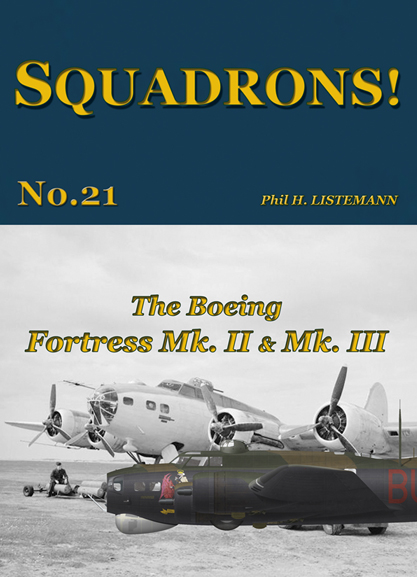
The Fortress Mk.II and Mk.III were the equivalent of the USAAF’s B-17E/F and G. The Fortress Mk.I was the B-17C as featured in ‘SQUADRONS! No. 4’. The Fortress Mk.I was only used in small numbers (20), but, for the British, it was the first step leading to the large scale introduction of the Fortress to Bomber Command. But that never happened and all the orders were consequently cancelled after the experiment of the Fortress Mk I. However, the RAF found a second interest in the Fortress while the Battle of the Atlantic was raging. Indeed in the meantime, trials of the Fortress in Coastal Command proved satisfactory and, as this Command was looking for long-range land-based patrol aircraft, the Fortress was requested to equiq some Coastal Command squadrons. Later in the war, the Fortress would return in the Bomber Command acting as an ECM aircraft from 1944 until the end of the war, while some others would be used by the Meteorological squadrons by 1945. The operational usage of the Fortress II and III in the RAF is here told in 70 pages, illustrated with 50 photographs and 6 colour profiles. The unexpected usage of the Fortress of the RCAF between 1944 and 1946 is also included in this study.
Paperback version is available with ISBN 979-1096490-10-3
**********************
HOW TO ORDER:
Send your mailing address with your phone number in using ‘contact’ button and we will respond with a Paypal request with the following amount:
EU, UK and USA: 18.50 Euros postage included
Rest of the World: 20.50 Euros postage included
Multiple purchases with combined postage possible.
********************
Pdf is also available under ISBN 979-1096490-11-0
(new PDF uploaded September 2023)
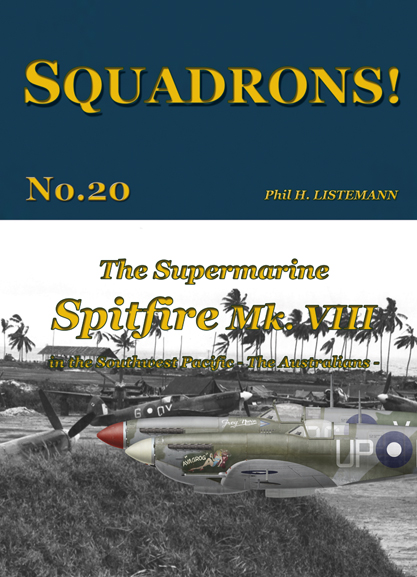
Designed before the Mk. IX, but following it into service because its radical design changes would have meant production delays when time was of the essence, the Spitfire Mk. Vlll was in fact a non-pressurised version of the Mk. VII designed for low altitude combat (see SQUADRONS! No. 6). At the outset it was the designated successor to the Mk. V, the replacement of which was planned from 1943 onwards but when it became available the Mk. IX had recently entered service with Fighter Command and appeared to have a bright future. Therefore, the RAF decided to retain the Mk. VIII for overseas theatres – the Mediterranean, Far East and the Pacific – where the replacement of the Spitfire Mk. V had become a necessity. One fourth of the production will reach the Southwest Pacific, and this volume focuses on the usage made by the three RAAF squadrons, Nos. 79, 452 and 457. Close to seventy photographs (including three in colour) and eight colour profiles. The story of the British squadrons in the SWPac is told in SQUADRONS! No. 14.
Available as a paperback version as 979-1096490-08-0
**********************
HOW TO ORDER:
Send your mailing address with your phone number in using ‘contact’ button and we will respond with a Paypal request with the following amount:
EU, UK and USA: 14.50 Euros postage included
Rest of the World: 17.50 Euros postage included
Multiple purchases with combined postage possible.
********************
pdf, epub and Kindle versions are available with ISBN 979-1096490-09-7 (see below).
Turret equipped fighters became operational with the Royal Air Force during WW2 as the result of the British Government’s ongoing concern about German aerial attacks on the United Kingdom during World War One. The possibility of enemy bombers, and not just German ones, once again flying over the country and dropping their deadly load on British soil had troubled them ever since. In the 1930s a fighter fitted with a gun turret was considered to be an effective way of attacking bombers and would be a feasible alternative to conventional fighters. The result of this concept was the Defiant, which was developed to meet this operational requirement. After a promising start during the dark days of the Battle of France the Defiant was withdrawn from day operations, after having sustained heavy losses, during the Battle of Britain, the switched to the night fighter role until the spring of 1942. This publication of 80 pages is illustrated with 80 photographs and four colour profiles and included all the confirmed and probable claims made by Defiant crews between 1940 and 1942. All losses of Defiants used as fighters are also listed, squadron by squadron.
Revised 2018, updated Feb.2020, May 2022
Available as a paperback version as 979-1096490-06-6
**********************
HOW TO ORDER:
Send your mailing address with your phone number in using ‘contact’ button and we will respond with a Paypal request with the following amount:
EU, UK and USA: 18.00 Euros postage included
Rest of the World: 21.00 Euros postage included
Multiple purchases with combined postage possible.
********************
PDF version is available as 979-1096490-07-3.
(new PDF uploaded September 2023)
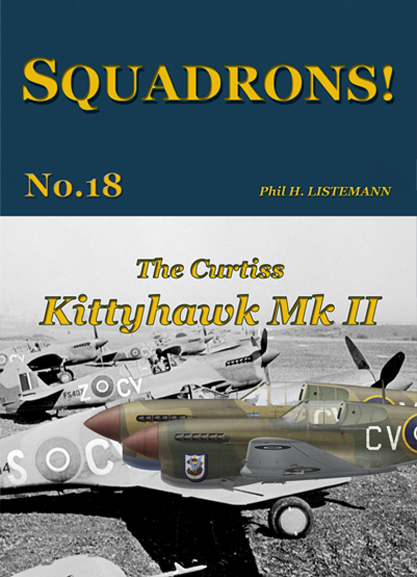
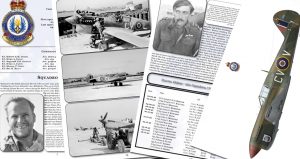
The Curtiss P-40 was the most numerous USAAF fighter on hand when the United States entered the war in December 1941. A development of the Curtiss P-36, the P-40 was essentially a P-36 equipped with an Allison inline V12 V-1710. The French were the first to express an interest in this model, known as the H-81, having already ordered the Curtiss H-75, the export version of the P-36. The Curtiss H-81 would later be purchased by the USAAC and the RAF as the Tomahawk. Curtiss continued to improve the breed and a new production model, the H-87, was soon available with a new version of the V-1710 that had a spur-gear reduction mechanism, raising the engine thrust-line. This caused the nose profile to be redesigned, hence the new Curtiss designation.
The RAF became interested in purchasing this version as the Kittyhawk for its squadrons fighting in the Western Desert and to replace the Tomahawk already in service. In all four Marks would be used by the RAF, the Mk II corresponding to the P-40F/L and would see service in only two squadrons, the Australian 3 Squadron and the British 260 Squadron and saw action for the first time shortly before the Battle of El Alamein. The full story of the Kittyhawk Mk II is here told in 38 pages illustrated with 40 photos and 6 colour profiles.
Profiles:
FL274/HS-V – 260 Sqn
FL308/CV-V – 3 Sqn RAAF
FS400/CV-Y – 3 Sqn RAAF
FS490/CV-V – 3 Sqn RAAF
FS452/5 – 239 Wing Training Flight
FL294/29 – CIC Meknes, French Air Force
Available as a paperback version as 979-1096490-04-2
**********************
HOW TO ORDER:
Send your mailing address with your phone number in using ‘contact’ button and we will respond with a Paypal request with the following amount:
EU, UK and USA: 13.50 Euros postage included
Rest of the World: 16.00 Euros postage included
Multiple purchases with combined postage possible.
********************
PDF version is available as 979-1096490-05-9 (see below)
(new PDF uploaded August 2023)
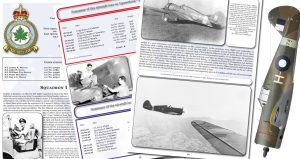
The Curtiss Hawk 75 was the export version of the USAAC Curtiss P-36 that became, from 1936 onwards, the standard American single-seat fighter and represented a big step forward for the USAAC. The French were the first to express interest in this fighter and ordered large quantities before and during the first months of WW2. When the French ask for an armistice, all of the contracts were taken over by the British and the balance of the Curtiss H-75 still to be delivered were shipped out to the UK where they became the Mohawk. The RAF also took charge of more Mohawks coming from various sources and in all over 200 Mohawks were included in the RAF inventory. Some were handed over to the SAAF where they served in East Africa, while most would be sent to the Far East where they served until the end of 1943. The full story of the Mohawk in the RAF and in the SAAF is here told in 50 pages illustrated with 55 photos and 7 colour profiles.
UPDATED October 2019, August 2023
Profiles:
BJ546/OQ-O – 5 Sqn
AR690/E – 5 Sqn
BS796/T – 5 Sqn
BB928 – 155 Sqn
AR674/H – 155 Sqn
BS790/WPB – 169 Wing
2540/G – 6 Sqn SAAF
Available as a paperback version as 979-1096490-00-4
HOW TO ORDER:
Send your mailing address with your phone number in using ‘contact’ button and we will respond with a Paypal request with the following amount:
EU, UK and USA: 14.50 Euros postage included
Rest of the World: 16.00 Euros postage included
Multiple purchases with combined postage possible.
********************
PDF available as 979-1096490-01-1
(new PDF uploaded August 2023)