Archives

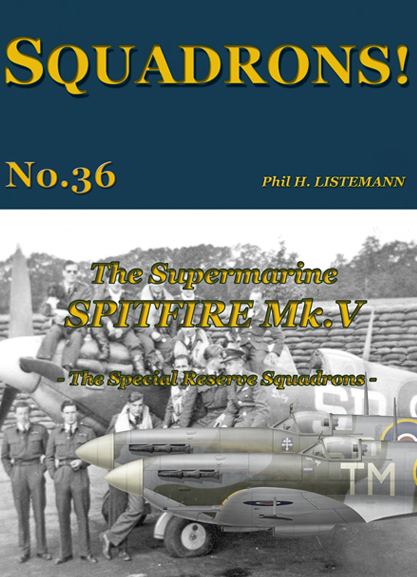
SQUADRONS! No.36: The Supermarine Spitfire Mk V – The Special Reserve squadrons

Paradoxically, the Mk.V, which ended up being the most numerous variant of the famous fighter built, was not even an intended development of the design. Indeed, it was only considered because of the abandonment of the Spitfire Mk.III. As the Luftwaffe was continually improving its formidable Messerschmitt Bf 109, the latest version of which, the Bf 109F, clearly outclassed the Spitfire Mk.II, the British had no other option but to rapidly find a successor to the latter. At this time, at the end of 1940, the British did not know what the Germans’ were planning and expected them to carry on undertaking daylight raids upon the return of nicer weather. The RAF, therefore, wanted to be ready to counter the new German fighter developments. A solution was soon found by mounting a Merlin 45 (former Merlin III), a simplified version of the Merlin XX, on a slightly strengthened Spitfire Mk.I or Mk.II airframe. Several Spitfires were thus modified, with either a Merlin 45 or Merlin 46, during the first weeks of 1941. The resulting feedback was good and the Air Ministry requested that Supermarine modify, as early as possible, Spitfires already on the assembly lines so they could be put into service as rapidly as possible. This is how the Spitfire Mk.V came to be. In 1941, the Spitfire Mk V progressively became the backbone of the Fighter Command while new squadrons were formed or coverted that year. Two pre-war squadrons, initially formed as Special Reserve squadrons, Nos. 501 and 504, converted to the type in 1941 and the book, made of 36 pages with about 25 photographs and five colour profiles, narrates their operational usage of the Spitfire Mk V.

Profiles:

W3846/SD-Z – 501 Sqn

W3457/SD-P – 501 Sqn

EN899/SD-P – 501 Sqn

EE624/TM-R – 504 Sqn

AA742/IRG – Ibsley Wing (Gleed)
 

ISBN: 979-1096490-56-1

**********************

HOW TO ORDER:

Send your mailing address  with your phone number in using ‘contact’ button and we will respond with a Paypal request with the following amount:

EU, UK and USA: 12.50 Euros postage included

Rest of the World: 15.00 Euros postage included

Multiple purchases with combined postage possible.

********************

Pdf version is available as 979-1096490-57-8

(new pdf downloaded September 2023)
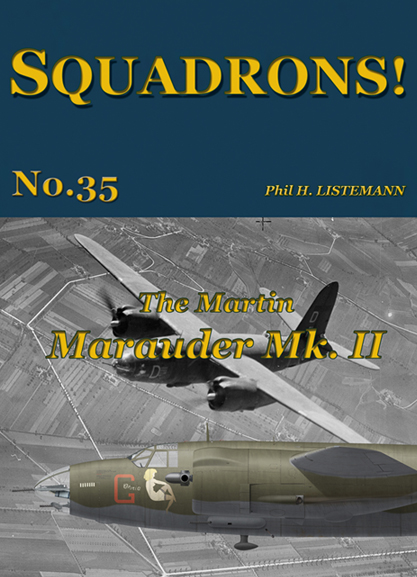
SQUADRONS! No.35: The Martin Marauder Mk II

In March 1941 the Lend-Lease agreement was approved by Congress and this breathed new life into the Commonwealth war effort. The RAF was able to study new types and the Martin Marauder was chosen to serve in the Middle East. After a first batch of Marauder Mk Is (see SQUADRONS! 13), a batch of Marauder Mk IIs (B-26C) followed. If the Marauder Mk I was used for anti-shipping ops, the Marauder Mk II would be mainly used as a conventional medium bomber in 1944. Two South African squadrons, 12 and 24, became the major Marauder Mk II operators generating a close link between the SAAF and the type but also with Belgium as some Belgian aircrew served with 12 and 24 Squadrons SAAF in 1944. The operational usage of the Marauder Mk II is here fully described in about 30 pages. Six colour profiles are also included.

Available as a paper version with ISBN 979-1096490-54-7

**********************

HOW TO ORDER:

Send your mailing address  with your phone number in using ‘contact’ button and we will respond with a Paypal request with the following amount:

EU, UK and USA: 14.00 Euros postage included

Rest of the World: 16.00 Euros postage included

Multiple purchases with combined postage possible.

********************

Pdf is available as 979-1096490-55-4

New PDF uploaded January 2024

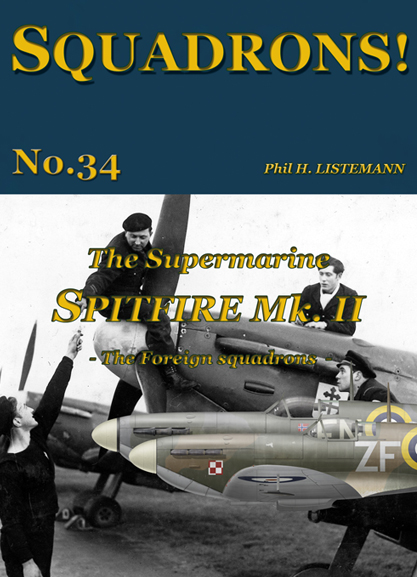
SQUADRONS! No.34: The Supermarine Spitfie Mk II – The Foreign squadrons

Once production of the Spitfire Mk.I was underway, an improved version was looked at based around the 1175hp Merlin XII. The Spitfire Mk.II, or Supermarine 329 as its constructor named it, was born. Great hopes were placed in this new version as an order for 1000 aircraft was placed on 12 April 1939, before the mark’s first flight, for serials P7280 – P8799. This production run was launched at Castle Bromwich in Birmingham, the new Supermarine production line. The first aircraft were delivered in June 1940 and the Spitfire Mk.II included all improvements and refine¬ments added to the Spitfire Mk.I. Deliveries continued up to July 1941. The Mk.II entered service, in the midst of the Battle of Britain, first with 66 Squadron and progressively, the Spitfire Mk.II became standard equipment across Fighter Command with no less than 56 squadrons known to have been equipped, fully or partially, with the mark. Peak usage was reached during the summer of 1941, but, from the autumn of that year, it began to be withdrawn from first line units in favour of the Mk.V. Among the squadrons equipped with the Spitfire Mk II, there were the squadrons manned by men coming from the occupied Europe, the Poles, Czechoslovaks, French, Belgians and Norwegians. The Poles made an intensive usage of their Spitfire Mk IIs and encountered considerable success during the summer of 1941. Illustrated with over 40 photographs and seven colour profiles. 48 pages.


Available as a paperback version with ISBN 979-1096490-44-8

*******************

HOW TO ORDER:

Send your mailing address and your phone number in using ‘contact’ button and we will respond with a Paypal request with the following amount:

EU, UK and USA: 16.00 Euros postage included

Rest of the World: 18.50 Euros postage included

Multiple purchases with combined postage possible.

*********************

Pdf is available as 979-1096490-45-5


new pdf uploaded December 2023

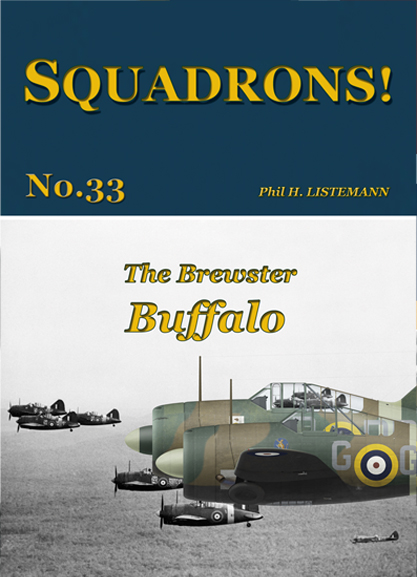
SQUADRONS! No.33: The Brewster Buffalo

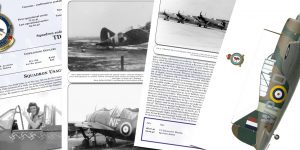
The Brewster Buffalo was born as the Brewster F2A for the United States Navy. It was the first monoplane fighter to be introduced into USN service. At the end of the thirties, with war approaching, many European countries were seeking new equipment, particularly modern fighters, and the Brewster looked promising and when war was declared in September 1939, requirements were drastically accelerated and the UK was among the first to place an order. For the British, the Buffalo was not an obvious option as they were already producing two excellent fighters, the Hawker Hurricane and the Supermarine Spitfire, that were far superior to the American design. The Brewster fighter was initially rejected by the British Purchase Commission for this reason. However, the Air Ministry soon realised that production of both Hurricanes and Spitfires would not be enough to meet the RAF’s increasing demands and the acquisition of foreign fighters was therefore seriously considered. By the end of 1939, all American manufacturers were overloaded and delivery delays repeatedly extended. Large orders could only be placed with the manufacturers not yet overloaded. The Brewster Corporation was one such manufacturer. Therefore, the Brewster 339 was the only suitable option and appeared to be a good alternative that left Hurricanes or Spitfires to theatres where the RAF was already engaged, like the Far East. When Japan invaded Malaya and Burma in December 1941, the Buffalo was the backbone of the RAF fighter force in the Far East. They faced to very experienced Japanese fighter pilots who gave no chance to the young pilots freshly graduated from advanced training schools. The sacrifice of those young Commonwealth pilots, most coming from Australia and NZ would be in vain Burma and Singapore would be lost. About seventy photos and eight colour profiles. 64 pages


UPDATED DECEMBER 2020


Available as a paper version with ISBN 979-1096490-40-0

**********************

HOW TO ORDER:

Send your mailing address  with your phone number in using ‘contact’ button and we will respond with a Paypal request with the following amount:

EU, UK and USA: 16.50 Euros postage included

Rest of the World: 19.50 Euros postage included

Multiple purchases with combined postage possible.

********************

Pdf version is available as 979-1096490-41-7


New PDF uploaded October 2023

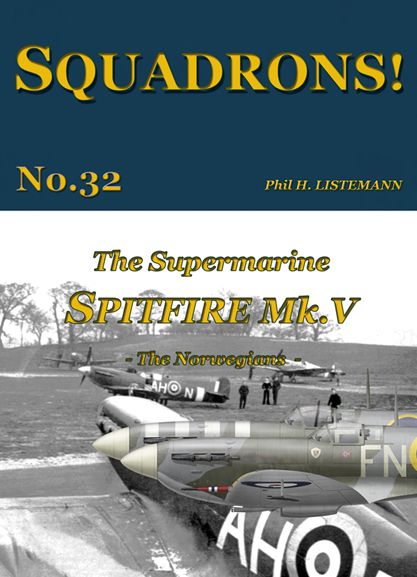
SQUADRONS! No.32: The Supermarine Spitfire Mk V – The Norwegians

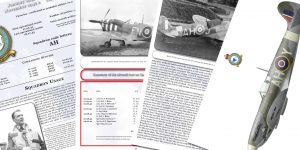
Paradoxically, the Mk.V, which ended up being the most numerous variant of the famous fighter built, was not even an intended development of the design. Indeed, it was only considered because of the abandonment of the Spitfire Mk.III. As the Luftwaffe was continually improving its formidable Messerschmitt Bf 109, the latest version of which, the Bf 109F, clearly outclassed the Spitfire Mk.II, the British had no other option but to rapidly find a successor to the latter. At this time, at the end of 1940, the British did not know what the Germans’ were planning and expected them to carry on undertaking daylight raids upon the return of nicer weather. The RAF, therefore, wanted to be ready to counter the new German fighter developments. A solution was soon found by mounting a Merlin 45 (former Merlin III), a simplified version of the Merlin XX, on a slightly strengthened Spitfire Mk.I or Mk.II airframe. Several Spitfires were thus modified, with either a Merlin 45 or Merlin 46, during the first weeks of 1941. The resulting feedback was good and the Air Ministry requested that Supermarine modify, as early as possible, Spitfires already on the assembly lines so they could be put into service as rapidly as possible. This is how the Spitfire Mk.V came to be. In 1941, the Spitfire Mk V progressively became the backbone of the Fighter Command and among the squadrons that switched onto the Spitfire Mk V, there were the two Norwegian fighter squadrons, Nos. 331 and 332. The operational usage of the Spitfire Mk V by those two squadrons is here described in 40 pages, 35 photos and illustrated with nine colour profiles.

(updated December 2023, September 2025)

Available as a paper version with ISBN 979-1096490-38-7

**********************

HOW TO ORDER:

Send your mailing address  with your phone number in using ‘contact’ button and we will respond with a Paypal request with the following amount:

EU, UK and USA: 13.00 Euros postage included

Rest of the World: 15.50 Euros postage included

Multiple purchases with combined postage possible.

********************

Pdf is now available as 979-1096490-39-4 (see below)

new PDF uploaded September 2025

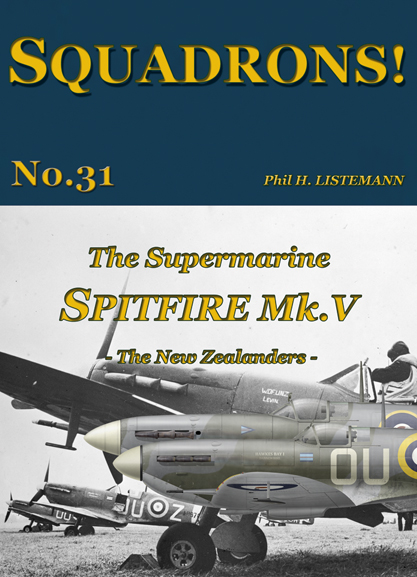
SQUADRONS! No.31: The Supermarine Spitfire Mk V – The New Zealanders

Paradoxically, the Mk.V, which ended up being the most numerous variant of the famous fighter built, was not even an intended development of the design. Indeed, it was only considered because of the abandonment of the Spitfire Mk.III. As the Luftwaffe was continually improving its formidable Messerschmitt Bf 109, the latest version of which, the Bf 109F, clearly outclassed the Spitfire Mk.II, the British had no other option but to rapidly find a successor to the latter. At this time, at the end of 1940, the British did not know what the Germans’ were planning and expected them to carry on undertaking daylight raids upon the return of nicer weather. The RAF, therefore, wanted to be ready to counter the new German fighter developments. A solution was soon found by mounting a Merlin 45 (former Merlin III), a simplified version of the Merlin XX, on a slightly strengthened Spitfire Mk.I or Mk.II airframe. Several Spitfires were thus modified, with either a Merlin 45 or Merlin 46, during the first weeks of 1941. The resulting feedback was good and the Air Ministry requested that Supermarine modify, as early as possible, Spitfires already on the assembly lines so they could be put into service as rapidly as possible. This is how the Spitfire Mk.V came to be. In 1941, the Spitfire Mk V progressively became the backbone of the Fighter Command and among the squadrons that switched onto the Spitfire Mk V, there is only one New Zelander squadron, 485. The operational usage of the Spitfire Mk V by the New Zealanders is here described in 36 pages, 30 photos and illustrated with six colour profiles.

REVISED OCTOBER 2020

Profiles:

AB870/OU-Z – 485 Sqn

W3579/OU-Q – 485 Sqn

BM233/OU-E – 485 Sqn

BM316/RA – RAF Kenley (Atcherley)

W3561/MB – Portreath Wing (Blake)

AB509/JMC – 142 Wing (Checketts)


Available as a paper version with ISBN 979-1096490-36-3

**********************

HOW TO ORDER:

Send your mailing address  with your phone number in using ‘contact’ button and we will respond with a Paypal request with the following amount:

EU, UK and USA: 13.50 Euros postage included

Rest of the World: 16.00 Euros postage included

Multiple purchases with combined postage possible.

********************

Pdf is available as ISBN 979-1096490-37-0 (below)

(new PDF downloaded August 2023)

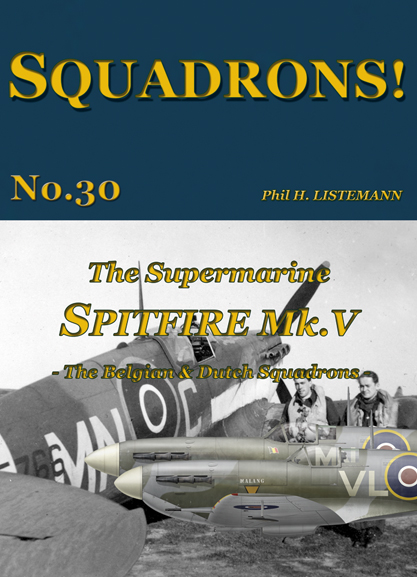
SQUADRONS! No.30: The Supermarine Spitfire Mk V – The Belgian and Dutch Squadrons

Paradoxically, the Mk.V, which ended up being the most numerous variant of the famous fighter built, was not even an intended development of the design. Indeed, it was only considered because of the abandonment of the Spitfire Mk.III. As the Luftwaffe was continually improving its formidable Messerschmitt Bf 109, the latest version of which, the Bf 109F, clearly outclassed the Spitfire Mk.II, the British had no other option but to rapidly find a successor to the latter. At this time, at the end of 1940, the British did not know what the Germans’ were planning and expected them to carry on undertaking daylight raids upon the return of nicer weather. The RAF, therefore, wanted to be ready to counter the new German fighter developments. A solution was soon found by mounting a Merlin 45 (former Merlin III), a simplified version of the Merlin XX, on a slightly strengthened Spitfire Mk.I or Mk.II airframe. Several Spitfires were thus modified, with either a Merlin 45 or Merlin 46, during the first weeks of 1941. The resulting feedback was good and the Air Ministry requested that Supermarine modify, as early as possible, Spitfires already on the assembly lines so they could be put into service as rapidly as possible. This is how the Spitfire Mk.V came to be. In 1941, the Spitfire Mk V progressively became the backbone of the Fighter Command and among the squadrons that switched onto the Spitfire Mk V, there are the two Belgian and the single Dutch fighter squadrons, 349 and 350 for the Belgians and 322 for the Dutch. This is their story while flying the Spitfire V made of 48 pages, around 40 photos and eleven colour profiles.

Profiles:

BL540/MN-Y – 350 Sqn

BM381/MN-A – 350 Sqn

BM230/MN-F – 350 Sqn

EE766/MN-C – 350 Sqn

AR498/MN-G – 350 Sqn

AR498/MN-G – 350 Sqn (second marking)

EE613/MN-L – 350 Sqn

AA751/GE-K – 349 Sqn

xxx/VL-D – 322 Sqn

BM515/VL-P – 322 Sqn

BM354/VL-A – 322 Sqn


Available as a paperback version with ISBN 979-1096490-34-9

*******************

HOW TO ORDER:

Send your mailing address and your phone number in using ‘contact’ button and we will respond with a Paypal request with the following amount:

EU, UK and USA: 15.50 Euros postage included

Rest of the World: 18.00 Euros postage included

Multiple purchases with combined postage possible.

*********************

Pdf is also available as 9791096490-35-6

(new PDF uploaded September 2023)
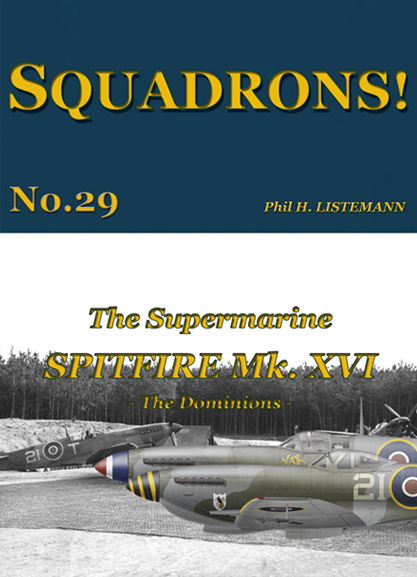
SQUADRONS! No.29: The Supermarine Spitfire Mk. XVI – The Dominions

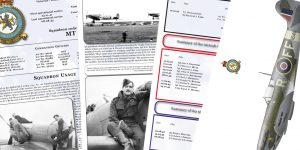
The Spitfire XVI is one of the Spitfire mark to have been so far little covered in depth. It was actually a Mk. IX engined with an American built Packard engine but otherwise it was very familar to a IX. It was used in the fighter-bomber role, from the UK with the Fighter Command or from the Continent with the 2 TAF. Of the twenty or so fighter units that flew the Mk.XVI before the end of production, roughly half were from the Dominions and six became operational on the type: four Canadian squadrons of No. 127 (RCAF) Wing of 2 TAF (Nos. 403, 416, 421 and 443), while two Australian squadrons (Nos. 451 and 453) flew their operations from the British Isles under the authority of Fighter Command. The others had been re-equipped by the end of the war in Europe, but only flew this variant for a short time. The Canadian wing achieved considerable success between November 1944 and May 1945, making this unit one of the most active of 2 TAF in the last months of the war in Europe. A previous title in connection with the British has been already published (SQUADRONS! 12).


UPDATED OCTOBER 2020, October 2024


Available as a paperback version with ISBN 979-1096490-32-5

*******************

HOW TO ORDER:

Send your mailing address and your phone number in using ‘contact’ button and we will respond with a Paypal request with the following amount:

EU, UK and USA: 17.50 Euros postage included

Rest of the World: 19.50 Euros postage included

Multiple purchases with combined postage possible.

*********************

PDF is available as 979-1096490-33-2

new PDF uploaded October 2024

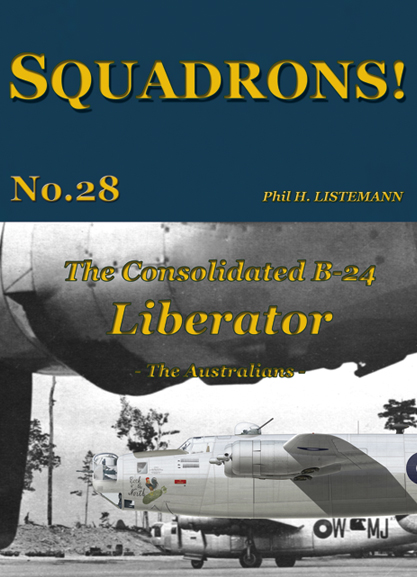
SQUADRONS! No.28: The Consolidated B-24 Liberator – The Australians

The Consolidated B-24 Liberator was the most produced heavy bomber of WW2 with close to 19,000 units built. The design was progressively improved during the war and Consolidated developed variants up to the XB-24N. It was widely used by the Commonwealth nations during WW2. The RAF alone flew about 2,300 B-24s over nine marks (Liberator Mk.I to Mk.IX) during the war. They were used as bombers in the Middle East, southern Europe and Far East, in the maritime reconnaissance role, as electronic warfare platforms, and as transports. Australia was another large user during the war, but without any connection to the UK orders and they were used in the Southwest Pacific. Their Australian operational usage is here described in over 50 pages, 40 photographs and five colour profiles.

Available as a paperback version with ISBN 979-1096490-30-1

*******************

HOW TO ORDER:

Send your mailing address  with your phone number in using ‘contact’ button and we will respond with a Paypal request with the following amount:

EU, UK and USA: 14.50 Euros postage included

Rest of the World: 17.00 Euros postage included

Multiple purchases with combined postage possible.

*********************

PDF version is available (as 9791096490-31-8).


New pdf uploaded October 2023

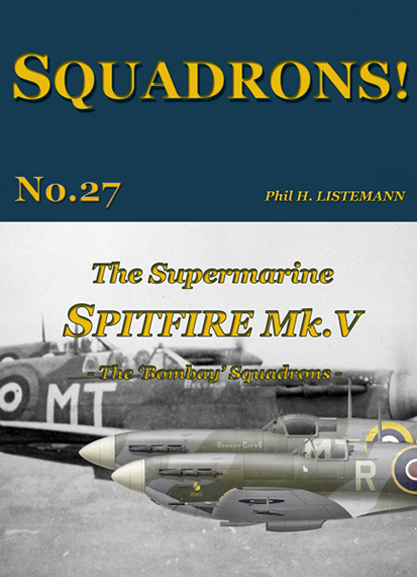
SQUADRONS! No.27: The Supermarine Spitfire Mk V – The ‘Bombay’ Squadrons

Paradoxically, the Mk.V, which ended up being the most numerous variant of the famous fighter built, was not even an intended development of the design. Indeed, it was only considered because of the abandonment of the Spitfire Mk.III. As the Luftwaffe was continually improving its formidable Messerschmitt Bf 109, the latest version of which, the Bf 109F, clearly outclassed the Spitfire Mk.II, the British had no other option but to rapidly find a successor to the latter. At this time, at the end of 1940, the British did not know what the Germans’ were planning and expected them to carry on undertaking daylight raids upon the return of nicer weather. The RAF, therefore, wanted to be ready to counter the new German fighter developments. A solution was soon found by mounting a Merlin 45 (former Merlin III), a simplified version of the Merlin XX, on a slightly strengthened Spitfire Mk.I or Mk.II airframe. Several Spitfires were thus modified, with either a Merlin 45 or Merlin 46, during the first weeks of 1941. The resulting feedback was good and the Air Ministry requested that Supermarine modify, as early as possible, Spitfires already on the assembly lines so they could be put into service as rapidly as possible. This is how the Spitfire Mk.V came to be. In 1941, the Spitfire Mk V progressively became the backbone of the Fighter Command while new squadrons were formed that year. Some were called ‘Gift’ squadrons and named after a country, region or organisation that had donated sufficient funds to equip one or more units. Of these, two were connected to the City of Bombay: No. 122 and No. 132 and the book is made of 34 pages with about 30 photographs and five colour profiles.

 Available as a paper version with ISBN 979-1096490-28-8

**********************

HOW TO ORDER:

Send your mailing address  with your phone number in using ‘contact’ button and we will respond with a Paypal request with the following amount:

EU, UK and USA: 13.50 Euros postage included

Rest of the World: 15.00 Euros postage included

Multiple purchases with combined postage possible.

********************

 PDF version is available as 979-1096490-29-5

New PDF uploaded October 2023