Archives

SQUADRONS! No.75: The Supermarine Spitfire Mk V – The Australians in Europe and the Middle East

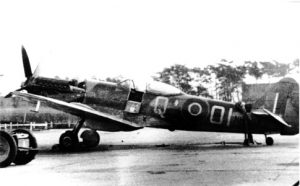
The Spitfire Mk V was widely used from 1941 onwards and came at the time the Fighter Command of RAF in Great Britain was expanded with new fighter squadrons being formed that year and the following year. Among those units there were the units formed with Australian nationals, Nos 452 and 457 Squadons, which were replaced by No 453 Squadron when 452 and 457 were sent to Australia to defend the country against Japanese raids in 1942. Later on, in the Middle East, a fourth Australian squadron became a fighter squadron after having been a tactical reconnaissance unit since its formation in 1941. The operational activity of each squadron on the Spitfire Mk V is fully described here in 68 pages, illustrated with close to 80 photos, as well 14 colour profiles illustrating twelve concise biographies.

ISBN: 978-2494471-34-4

******************************

HOW TO ORDER:

Send your mailing address  with your phone number in using ‘contact’ button and we will respond with a Paypal request with the following amount:

EU, UK and USA: 15.00 Euros postage included

Rest of the World: 17.00 Euros postage included

***********************************

PDF version is available as 978-2494471-35-1

(see below)

June 2025: Phantom FG.1 (FAA – training units) – Pt 2 – 16 photos

Phantom FG.1 – 251: Phantom XT857/LU, Phantom Conversion Flight (PCF)

Phantom FG.1 – 252: Phantom XT857/LU, Phantom Conversion Flight (PCF) -different angle

Phantom FG.1 – 253: Phantom XT857/U, Phantom Training Flight (PTF)

Phantom FG.1 – 254: Phantom XT861/V, Phantom OCU (POCU)

Phantom FG.1 – 255: Phantom XT861/V, Phantom OCU (POCU)

Phantom FG.1 – 256: Phantom XT861/V, Phantom OCU (POCU)

Phantom FG.1 – 257: Phantom XT866/W, Phantom Training Flight (PTF)

Phantom FG.1 – 258: Phantom XV569/X, Phantom Training Flight (PTF)

Phantom FG.1 – 259: Phantom XV570/LU, Phantom Conversion Flight (PCF)

Phantom FG.1 – 260: Phantom XV570/Y, Phantom OCU (POCU)

Phantom FG.1 – 261: Phantom XV570/LU, Phantom Conversion Flight (PCF)

Phantom FG.1 – 260: Phantom XV5569, Naval Aircraft Support Unit (NASU)

Phantom FG.1 – 263: Phantom XT857, A&AEE

Phantom FG.1 – 264: Phantom XT858, unmarked

Phantom FG.1 – 265: Phantom XV567, A&AEE

Phantom FG.1 – 266: Phantom XT865, unmarked

SQUADRONS! No.74: The Hawker Typhoon – No 609 (West Riding) Squadron and the ‘Belgian flight’

The Hawker Typhoon was designed to Air Ministry specification F.18/37 which sought to take advantage of the new generation of 2000hp engines and satisfy the latest requirements in armament. This major step up demanded a larger and more advanced airframe than that of the company’s then current Hurricane and by March 1938 work had commenced on the first two prototypes; one with the Napier Sabre, soon called ‘Typhoon’ and the other with a Rolls-Royce Vulture, later to be named the ‘Tornado’; this latter machine was the first to fly, on 6 October 1939. The Vulture did not give too many problems in the Hawker fighter but by the end of 1940 it was experiencing serious trouble with its installation in the Avro Manchester bomber, and as a result the project was abandoned. With the third engine (Bristol Centaurus) of the new generation still some way off, the Air Ministry had little option but to concentrate on the Typhoon, which had made its first flight on 24 February 1940. The new aircraft encountered teething problems and was also delayed by production priorities for other Hawker types during the Battle of Britain. During its early operational life the Typhoon had to overcome problems that threatened to end its service, but these were eventually remedied so that, by the last quarter of 1943, the Typhoon had become a reliable aircraft. Improvements included the introduction of the new single piece ‘blown’ hood, a four-bladed propeller and an enlarged tailplane, but there was no change in designation. When production ceased in November 1945, 3317 Typhoons had been built.At first pure fighters were produced, but, by the spring of 1943, only the fighter-bomber version was coming off the production line and by the end of the year all the Typhoon squadrons were undertaking some form of ground attack role. On the eve of D-Day the Typhoon had become the backbone of the 2 TAF fighter-bomber force with no less than eighteen squadrons active. This book narrates the operational usage of No 609 Squadron, one of the first squadrons to be equiped with the Typhoon from April 1942 onwards, initially under Fighter Command authority, then with the 2 TAF. This squadron was unique as it had a ‘Belgian Flight; over 50 Belgian pilots served with 609 during the war and three Belgians even commanded 609 during the Typhoon era. Made of over 60 photos and 12 colour profiles (paperback version).

ISBN: 978-2494471-32-0

******************************

HOW TO ORDER:

Send your mailing address  with your phone number in using ‘contact’ button and we will respond with a Paypal request with the following amount:

EU, UK and USA: 16.00 Euros postage included

Rest of the World: 18.50 Euros postage included

***********************************

PDF version is available as 978-2494471-33-7

(see below)

May 2025: Supermarine Spitfire XIV – Europe: 31 photos

Each photograph is offered at a 300dpi res/13x8cm size making them available for a very good quality digital print, but also for Iphone/IPad, smartphone or computer screen (but should convert the image into a jpeg format for doing so)

Spitfire XIV – Europe – 51: Spitfire XIV RB188/DL-K, No 91 Squadron

Spitfire XIV – Europe – 52: Spitfire XIV NH654/DL-F, No 91 Squadron

Spitfire XIV – Europe – 53: Spitfire XIV RM619/AP-D, No 130 Squadron

Spitfire XIV – Europe – 54: Spitfire XIV RM693/AP-S, No 130 Squadron

Spitfire XIV – Europe – 55: Spitfire XIV NH700/VL-P, No 322 (Dutch) Squadron

Spitfire XIV – Europe – 56: Spitfire XIV NH718/3W-G, No 322 (Dutch) Squadron

Spitfire XIV – Europe – 57: Spitfire XIV RN119/AE-J, No 402 (RCAF) Squadron

Spitfire XIV – Europe – 58: Spitfire XIV RM862/AE-K, No 402 (RCAF) Squadron

Spitfire XIV – Europe – 59: Spitfire XIV RM819/C, No 430 (RCAF) Squadron

Spitfire XIV – Europe – 60: Spitfire XIV RM817/V, No 430 (RCAF) Squadron

Spitfire XIV – Europe – 61: Spitfire XIV RM795/T, No 2 Squadron

Spitfire XIV – Europe – 62: Spitfire XIV NH783/OI-H, No 2 Squadron

Spitfire XIV – Europe – 63: Spitfire XIV NH903/OI-Q, No 2 Squadron

Spitfire XIV – Europe – 64: Spitfire XIV TZ112/OI-G, No 2 Squadron

Spitfire XIV – Europe – 65: Spitfire XIV RM825/Q, No 2 Squadron

Spitfire XIV – Europe – 66: Spitfire XIV TZ128, No 2 Squadron

Spitfire XIV – Europe – 67: Spitfire XIV RM797/EB-E, No 41 Squadron

Spitfire XIV – Europe – 68: Spitfire XIV RM799/EB-J, No 41 Squadron

Spitfire XIV – Europe – 69: Spitfire XIV RB159/DW-D, No 610 Squadron

Spitfire XIV – Europe – 70: Spitfire XIV RB159/DW-D, RB150/DW-A and RB166/DW-G, No 610 Squadron

Spitfire XIV – Europe – 71: see above

Spitfire XIV – Europe – 72: Spitfire XIV RB169/MN-F, No 350 (Belgian) Squadron

Spitfire XIV – Europe – 73: Spitfire XIV RM748/MN-Z, No 350 (Belgian) Squadron

Spitfire XIV – Europe – 74: Spitfire XIV TX984/UU-D, No 226 OCU

Spitfire XIV – Europe – 75: Spitfire XIV MV259

Spitfire XIV – Europe – 76: Spitfire XIV RB151

Spitfire XIV – Europe – 77: Spitfire XIV RM784

Spitfire XIV – Europe – 78: Spitfire XIV MV247

Spitfire XIV – Europe – 79: Spitfire XIV RB142

Spitfire XIV – Europe – 80: Spitfire XIV NH922/2I-B, No 443 (RCAF) Squadron

Spitfire XIV – Europe – 81: Spitfire XIV TZ198/2I-M, No 443 (RCAF) Squadron

SQUADRONS! No.73: The Spitfire Mk XIV – The definitive operational history 1944-1945

The Spitfire XIV was the logical development of the Spitfire Mk XII (see SQUADRONS! 5). The Mk.XIV differed from the Mk.XII in that the longer, two-stage supercharged Griffon 65 was mounted further forward. A new five-bladed Rotol propeller was used and was the most obvious visual difference compared to earlier marks. The first batch of aircraft to fly with the Griffon 60 series engines were six converted Mk.VIIIs . The first one of these was flown on 20 January 1943, with production ordered following a series of trials. The first aircraft left the production line in October 1943 following the amendment of existing Spitfire contracts. The XIV was initially seen as an interim design pending the Spitfire Mk.XVIII’s availability. Delays with the XVIII meant the XIV became one of the major Spitfire fighter variants and a valuable asset for the RAF during the final year of the war. The XIV was built as a fighter, but was also developed for fighter-reconnaissance (FR) to replace the effective, but ageing, Mustang in the Tac/R role. During the war only a limited number of squadrons were equipped with the type and Nos. 2, 41, 91, 130, 268, 610 Sqns, 322 Dutch, 350 Belgian and the Canadian 402, 414 and 430. More squadrons received the type between VE-Day and September 1945. This book covers the operational usage of the Spitfire XIV as a fighter and as a tactical reconnaissance aircraft. A short chapter covers also the arrival of the Spitfire XIV in the Far East. This book is illustrated with about 140 photos and 30 colour profiles (paperback version). 130 pages.

Available as a paperback version with ISBN 978-2494471-30-6

**********************

HOW TO ORDER:

Send your mailing address  with your phone number in using ‘contact’ button and we will respond with a Paypal request with the following amount:

EU, UK and USA: 23.00 Euros postage included

Rest of the World: 25.50 Euros postage included

Multiple purchases with combined postage possible.

********************

PDF version is available as 978-2494471-31-3

(see below)

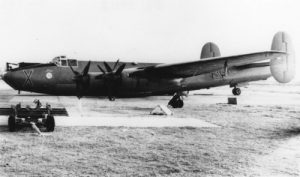
March 2025: Avro Shackleton MR.2 – 18 photos

Each photograph is offered at a 300dpi res/13x8cm size making them available for a very good quality digital print, but also for Iphone/IPad, smartphone or computer screen (but should convert the image into a jpeg format for doing so)

Shackleton – 41: Shackleton MR.2 WG532/E, No. 205 Sqn

Shackleton – 42: Shackleton MR.2 WG555/N, No. 204 Sqn

Shackleton – 43: Shackleton MR.2 WL738/Y, No. 204 Sqn

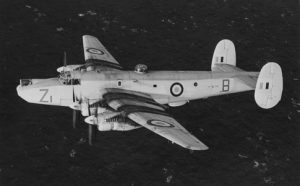
Shackleton – 44: Shackleton MR.2 WL742/Z1-B, No. 206 Sqn

Shackleton – 45: Shackleton MR.2 WL750/W, No. 224 Sqn

Shackleton – 46: Shackleton MR.2 WL752/D, No. 37 Sqn

Shackleton – 47: Shackleton MR.2 WL753/Q, No. 224 Sqn

Shackleton – 48: Shackleton MR.2 WL759/B, No. 205 Sqn

Shackleton – 49: Shackleton MR.2 WL787/S, No. 38 Sqn

Shackleton – 50: Shackleton MR.2 WL789/D-F, ASWDU

Shackleton – 51: Shackleton MR.2 WL790/D, No. 205 Sqn

Shackleton – 52: Shackleton MR.2 WL797/C, No. 37 Sqn

Shackleton – 53: Shackleton MR.2 WL798/X, No. 38 Sqn

Shackleton – 54: Shackleton MR.2 WL800/A, No. 42 Sqn

Shackleton – 55: Shackleton MR.2 WR759/A, No. 205 Sqn

Shackleton – 56: Shackleton MR.2 WR964/Q, No. 204 Sqn

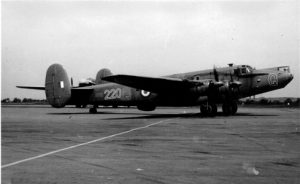
Shackleton – 57: Shackleton MR.2 WR969/Q, No. 220 Sqn

Shackleton – 58: Shacklerton MR.2 WL742/H, No. 203 Sqn

SQUADRONS! No.72: The New Zealand Day Fighter Squadrons in Europe

During WW2, New Zealand formed two day fighter squadrons in Europe, Nos 485 and 486 Squadrons. Book made of over 100 pages, over 120 photos and 30 colour profiles, the operational activity of each squadron is fully narrated.

Available as a paperback version with ISBN 978-2494471-28-3

**********************

HOW TO ORDER:

Send your mailing address  with your phone number in using ‘contact’ button and we will respond with a Paypal request with the following amount:

EU, UK and USA: 23.00 Euros postage included

Rest of the World: 25.00 Euros postage included

Multiple purchases with combined postage possible.

********************

PDF version is available as 978-2494471-29-0

(see below)

January 2025: Phantom FG.1 (FAA – training units) – 30 photos

Each photograph is offered at a 300dpi res/13x8cm size making them available for a very good quality digital print, but also for Iphone/IPad, smartphone or computer screen (but should convert the image into a jpeg format for doing so)

Phantom FG.1 – 201: Phantom FG.1, XT857/159, No 767 Squadron

Phantom FG.1 – 202: Phantom FG.1, XT859/725, No 700P Squadron

Phantom FG.1 – 203: Phantom FG.1, XT859/725, No 700P Squadron

Phantom FG.1 – 204: Phantom FG.1, XT860/726, No 700P Squadron

Phantom FG.1 – 205: Phantom FG.1, XT861/727, No 700P Squadron

Phantom FG.1 – 206: Phantom FG.1, XT861/155, No 767 Squadron

Phantom FG.1 – 207: Phantom FG.1, XT861/151, No 767 Squadron

Phantom FG.1 – 208: Phantom FG.1, XT862/722, No 700P Squadron

Phantom FG.1 – 209: Phantom FG.1, XT863/150, No 767 Squadron

Phantom FG.1 – 210: Phantom FG.1, XT863/150, No 767 Squadron

Phantom FG.1 – 211: Phantom FG.1, XT863/150, No 767 Squadron

Phantom FG.1 – 212: Phantom FG.1, XT863/723, No 700P Squadron

Phantom FG.1 – 213: Phantom FG.1, XT864/724, No 700P Squadron

Phantom FG.1 – 214: Phantom FG.1, XT864/151, No 767 Squadron

Phantom FG.1 – 215: Phantom FG.1, XT864/151, No 767 Squadron

Phantom FG.1 – 216: Phantom FG.1, XT865/156, No 767 Squadron

Phantom FG.1 – 217: Phantom FG.1, XT865/156, No 767 Squadron

Phantom FG.1 – 218: Phantom FG.1, XT866/158, No 767 Squadron

Phantom FG.1 – 219: Phantom FG.1, XT866/158, No 767 Squadron

Phantom FG.1 – 220: Phantom FG.1, XT867/152, No 767 Squadron

Phantom FG.1 – 221: Phantom FG.1, XT868/153, No 767 Squadron

Phantom FG.1 – 222: Phantom FG.1, XT869/154, No 767 Squadron

Phantom FG.1 – 223: Phantom FG.1, XT873/155, No 767 Squadron

Phantom FG.1 – 224: Phantom FG.1, XT875/157, No 767 Squadron

Phantom FG.1 – 225: Phantom FG.1, XT876/160, No 767 Squadron

Phantom FG.1 – 226: Phantom FG.1, XT876/160, No 767 Squadron

Phantom FG.1 – 227: Phantom FG.1, XV572/156, No 767 Squadron

Phantom FG.1 – 228: Phantom FG.1, XV579/157, No 767 Squadron

Phantom FG.1 – 229: Phantom FG.1, XV579/157, No 767 Squadron

Phantom FG.1 – 230: Phantom FG.1, XV579/157, No 767 Squadron

SQUADRONS! No.71: The Curtiss Kittyhawk – The Canadians

Called the Warhawk in American service, the Curtiss P-40 was the most numerous fighter type on hand when the United States entered the war in December 1941. A development of the Curtiss P-36, the P-40 was essentially a P-36 equipped with an inline Allison V12 V-1710. The French were the first to express an interest in this model, known as the H-81, having already ordered the export version of the P-36 (the H-75). The H-81 would later be purchased by the USAAC and the RAF (as the Tomahawk). Curtiss continued to improve the breed and a new production model, the H-87, was soon available with a new version of the V-1710 that had a spur-gear reduction mechanism, raising the engine thrust line. This caused the nose profile to be redesigned, hence the new designation.
The Royal Canadian Air Force (RCAF), wanting to reinforce its defensive fighter force. Consequently, an agreement was reached with Britain and 72 Kittyhawk Mk.Is (P-40Es) bought by the British Purchasing Commission were diverted to Canada. Later on, other Kittyhawks were delivered and in all eight fighter squadrons were eventually equipped (Nos 14, 111, 118, 130, 132, 133, 135 and 163) and served until the end of the war, not only in Canada, but also in Alaska where the RCAF deployed a fighter squadron to reinforce the USAAF in the Aleutians and to fight against the Japanese. The book is illustrated with 40 photographs and 6 colour profiles.

***********************************

Available as a paperback version with ISBN 978-2494471-26-9

************************

HOW TO ORDER:

Send your mailing address  with your phone number in using ‘contact’ button and we will respond with a Paypal request with the following amount:

EU, UK and USA: 14.00 Euros postage included

Rest of the World: 16.50 Euros postage included

Multiple purchases with combined postage possible.

********************

PDF is available as 978-2494471-27-6

(see below)

December 2024: Spitfire Mk XVI (wartime) – 23 photos

Each photograph is offered at a 300dpi res/13x8cm size making them available for a very good quality digital print, but also for Iphone/IPad, smartphone or computer screen (but should convert the image into a jpeg format for doing so)

Spitfire XVI – 01: Spitfire XVI RR245/LZ-S, No 66Sqn

Spitfire XVI – 02: Spitfire XVI SM247/LZ-R, No 66 Sqn

Spitfire XVI – 03: Spitfire XVI RR245/LZ-S, No 66 Sqn

Spitfire XVI – 04: Spitfire XVI TB898/LZ-T, No 66 Sqn

Spitfire XVI – 05: Spitfire XVI TB675/4D-V, No 74 Sqn

Spitfire XVI – 06: Spitfire XVI 9N-F, No 127 Sqn

Spitfire XVI – 07: Spitfire XVI RR255/9N-Y, No 127 Sqn

Spitfire XVI – 08: Spitfire XVI TE206/QH-M, No 302 Sqn

Spitfire XVI – 09: Spitfire XVI TD283/QH-V, No 302 Sqn

Spitfire XVI – 10: Spitfire XVI TB632/ZF-R, No 308 Sqn

Spitfire XVI – 11: Spitfire XVI TB995/ZF-O, No 308 Sqn

Spitfire XVI – 12: Spitfire XVI, line-up, No 317 Sqn

Spitfire XVI – 13: Spitfire XVI JH-U, No. 317 Sqn

Spitfire XVI – 14: Spitfire XVI 3W-J, No 322 Sqn

Spitfire XVI – 15: Spitfire XVI TE247/3W-V, No 322 Sqn

Spitfire XVI – 16: Spitfire XVI , 322 Sqn

Spitfire XVI – 17: Spitfire XVI RK893/3W-A, No 322 Sqn

Spitfire XVI – 18: Spitfire XVI KH-A, No 403 Sqn

Spitfire XVI – 19: Spitfire XVI KH-C, No 403 Sqn

Spitfire XVI – 20: Spitfire XVI SM392/AU-T, No 421 Sqn

Spitfire XVI – 21: Spitfire XVI TB886/AU-J, No 421 Sqn

Spitfire XVI – 22: Spitfire XVI SM329/2I-T, No 443 Sqn

Spitfire XVI – 23: Spitfire XVI TB476/2I-D and TB332/2I-N, No 443 Sqn